


Customer Overview
A global manufacturer of peritoneal dialysis (PD) therapies sought to expand production of a specialized dialysis product in the United States. The company had previously partnered with AZO on other projects and selected the team again to support the design of a new material handling process within an existing facility.
While the overall process design appeared relatively straightforward, the detailed requirements for handling sensitive materials introduced several engineering challenges that required careful evaluation.
Peritoneal dialysis treatments play a critical role in supporting patients with kidney failure. Ensuring the quality and reliability of the materials used in these therapies is essential to maintaining product integrity and patient safety.
The Challenge
Traditional manufacturing of peritoneal dialysis solutions involves dissolving sugars and salts into water before filling the solution into IV bags. However, transporting large volumes of liquid can create significant logistical and cost challenges within the supply chain.
To improve efficiency, the manufacturer implemented a process in which the liquid component is added at the point of use during dialysis treatment. Instead of shipping finished liquid solutions, the IV bags contain solid powders that are later dissolved when the treatment is administered.
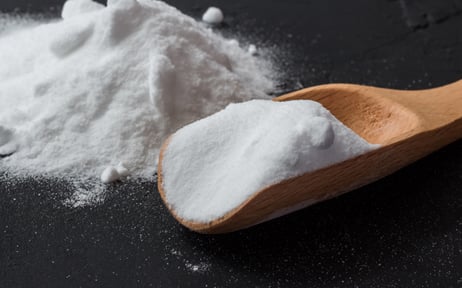
In this application, the key ingredient was sodium bicarbonate powder, which needed to be accurately filled into IV bags.
While sodium bicarbonate is a common industrial material, it presents a unique handling challenge in this application. The powder is fragile and prone to particle breakage when conveyed using traditional pneumatic conveying systems. Excessive conveying velocity can generate fines, which in turn can cause:
- Material degradation
- Increased dust generation
- Filter buildup and clogging
- Reduced product quality
The manufacturer needed a conveying solution that could transport the sodium bicarbonate efficiently while maintaining particle integrity and minimizing dust formation.
Engineering Evaluation
AZO engineers worked closely with the customer to analyze the material handling requirements and evaluate potential conveying methods.
The primary objective was to maintain tight control over conveying velocity. If the material moved too quickly through the conveying line, particle degradation and fines generation would occur. If the material moved too slowly, the system risked blockages and inconsistent flow.
Additionally, the conveying system needed to ensure that excess dust generated at the pickup point could be effectively removed without compromising throughput or requiring additional downstream conditioning equipment.
The AZO Solution
To address these challenges, AZO implemented a dense phase pneumatic conveying system utilizing AZO Multi-Air technology.
This system combines a dense phase pressure pot transporter with a controlled air injection system along the conveying pipeline.
Compressed air is introduced at precise intervals throughout the conveying line while system pressure is continuously monitored. By carefully controlling the pressure profile within the pipeline, the system maintains a stable and optimized conveying velocity.
This approach allows the material to move through the system in a controlled plug flow rather than at high velocity, significantly reducing the risk of particle breakage and fines generation.
Implementation
The final process design included several integrated components to ensure consistent material handling and product quality.
Sodium bicarbonate is discharged from bulk bags and fed into dense phase pressure pot transporters. Once pressurized with compressed air, the material is conveyed through the pipeline using the AZO Multi-Air dense phase system.
At the receiving end, the material is collected in a large vacuum receiver equipped with an integrated dust filtration system.
The filtered product is then discharged through a customized outlet fitted with rotary airlocks and delivered to the packaging machine, where the sodium bicarbonate powder is filled into IV bags as part of a continuous batch process.
This configuration allowed the conveying system to maintain consistent throughput while protecting the material from excessive mechanical stress.
The Results
The implemented system delivered several key operational advantages:
- Gentle material handling, preserving the integrity of fragile sodium bicarbonate particles
- Controlled conveying velocity, preventing excessive fines generation
- Effective dust removal at the receiving stage
- Improved material quality between pickup and final packaging
- Elimination of additional conditioning equipment, reducing both capital investment and system complexity
By optimizing the conveying process, AZO enabled the manufacturer to maintain both high product quality and efficient throughput within the new production line.
Conclusion
Projects like this demonstrate the important role that thoughtful engineering can play in pharmaceutical manufacturing. Peritoneal dialysis therapies provide life-sustaining treatment for patients around the world, and ensuring the reliable handling of critical materials is an essential part of delivering those therapies safely and consistently.
By working closely with manufacturers to solve complex material handling challenges, AZO continues to support the production of essential healthcare products that make a meaningful difference in people’s lives.
Related Blog Posts
Manufacturers across industries are balancing new opportunities with growing complexity as technology, market demand and evolving
Walk the batching area of a typical processing plant and you may see the same chain repeated: a silo feeding a screw conveyor, feeding a