


AI is everywhere right now — in boardroom conversations, trade publications, and vendor pitches. But for most plant managers and operations leaders, the more pressing question isn’t whether AI is worth paying attention to. It’s where to actually start.
AI adoption in the manufacturing industry is more practical — and more grounded — than the headlines suggest. It isn’t solely about robots making autonomous decisions or overnight transformation. And it isn’t about replacing the human workers who keep your manufacturing operations running every day.
The real opportunity is far more useful: using AI technologies to capture what your best people know, surface patterns your systems already generate, and help your team make faster, better-informed decisions across scheduling, maintenance, quality, and ingredient handling.
Majority of Manufacturers Seek AI Solutions
Smart manufacturing using AI solutions is not a buzzword or market trend, but a practical shift in how production decisions get made using real time data. In fact, 80 percent of manufacturing executives surveyed by Deloitte plan to invest 20 percent or more in smart manufacturing initiatives, focusing on foundational tools and technologies.
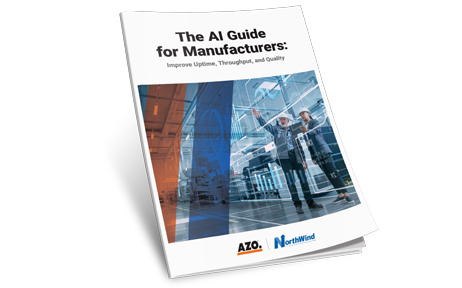
That's why AZO partnered with NorthWind Technical Services to create a practical guide for manufacturers — one that cuts through the hype and explores what AI can actually deliver on the plant floor. Here's a preview of what's inside our AI in manufacturing guide, and why it's worth your time.
Download the AI manufacturing solutions guide
The Gap Between AI’s Promise and Plant Reality
Many manufacturers face a familiar frustration: they’re told that integrating AI can transform their operations, but when they look at what’s actually in front of them — fragmented systems, inconsistent data, teams already stretched thin — it’s hard to see where to plug it in.
This is a common challenge. AI tools need reliable data to produce reliable outputs. If your ERP, SCADA, and MES systems aren’t talking to each other, or if your shop floor activity isn’t consistently captured, AI analysis will reflect those gaps.
But that doesn’t mean the starting line is as far off as it feels. Our guide lays out a practical path: begin with what you already have and trust — your SOPs, equipment documentation, P&IDs — and build from there. Manufacturing process automation doesn’t require tearing everything down and starting over.
Digitizing and organizing those assets is itself a foundational AI use case, one that reduces hunt time for operators and shortens onboarding for new hires.
Where AI Creates Real Value in Ingredient Handling Operations
Five areas emerge where AI delivers measurable impact by enhancing efficiency for manufacturers in bulk ingredient handling and production environments.
- Scheduling and inventory optimization
AI-powered scheduling tools can re-optimize production schedules in minutes rather than hours while accounting for material shortages, allergen changeovers, last-minute orders, and labor availability in real-time. Supply chain optimization and demand forecasting capabilities mean these systems can also anticipate upstream disruptions, not just react to them. In high-mix environments, this alone can meaningfully reduce waste and downtime. - Workforce support and knowledge retention
Experienced operators carry decades of know-how that often isn’t written down. AI tools can help capture and surface that institutional knowledge, making it accessible to newer team members on demand. The goal isn’t to replace expertise — it’s to scale it. - Process tuning and fault diagnosis
When equipment behaves unexpectedly, AI can correlate alarms and historian data to trace root causes faster than a manual investigation, even across connected upstream and downstream systems that aren’t obvious culprits. Machine learning algorithms and advanced analytics make it possible to analyze data across the entire production line — finding patterns that would take a skilled technician days to uncover. - Predictive maintenance
Rather than waiting for a failure or replacing components on a fixed schedule, AI uses real-time signals — think vibration, motor current, temperature — to forecast when service is actually needed. This AI-driven predictive maintenance approach draws on sensor data from across the facility to inform smarter decisions. For high-cost components with long lead times, this has a direct impact on uptime, maintenance costs, and total cost of ownership. - Quality control and anomaly detection
AI can shift quality checks upstream by flagging deviations during production rather than relying solely on post-process sampling. This kind of quality control automation — sometimes called AI-driven quality control — treats product quality assurance as a continuous, in-line process rather than an end-of-line checkpoint. In sectors like pet food, pharmaceuticals, and nutraceuticals, where a single dosing error can compromise an entire batch, this kind of real-time awareness is especially valuable.
AI Doesn’t Replace Human Decision-Making on Factory Floors
One of the most important things to keep in mind is also the most reassuring: in nearly every manufacturing application, the right AI model keeps a human in the loop.
AI makes recommendations. Operators make calls.
The best troubleshooters on your floor notice things instruments don’t capture well: a motor’s off hum, a mixer that feels different. AI adds a different kind of intelligence: correlating behavior across systems, checking performance against design documentation, and surfacing likely causes with “start here, then check this” guidance. Neither replaces the other.
What AI excels at is automating routine, repetitive tasks — logging, cross-referencing, pattern-matching — so your team can focus on the judgment calls that actually require experience. That’s also where it helps reduce human error in repetitive, high-volume processes.
Cultural adoption is often harder than technical rollout. Teams that had bad early experiences with AI like inaccurate recommendations, hallucinated outputs, or tools that didn’t understand their process may develop skepticism that takes time to overcome. Our guide addresses this directly and offers strategies for building team confidence in artificial intelligence tools from the start.
Get Started With Quick Win AI Applications and Solutions
We grounded this guide in how plants actually operate — with legacy equipment, mixed data infrastructure, staffing constraints, and the daily pressure to keep production running. We’re not assuming you have a greenfield facility or an unlimited IT budget.
Plus, we sequenced our AI recommendations to meet manufacturers where they are: start with what you already trust, identify one or two high-impact areas to pilot, and expand as your team builds confidence and your data infrastructure matures.
AI in manufacturing isn’t a future-state goal. For the plants getting ahead, it’s already part of how they schedule, troubleshoot, and maintain their systems. Implementing AI thoughtfully — starting with the right use cases and building toward seamless integration with existing systems — is how manufacturing companies turn operational efficiency into a genuine competitive edge. The question is whether your facility has a plan for how to get there.
Download The AI Guide for Manufacturers: Improve Uptime, Throughput, and Quality to see how AZO and NorthWind are helping facilities put AI to work where it matters most.
Related Blog Posts
If you aren’t performing maintenance regularly on your equipment, this story is a good reason to start.
From AI-powered maintenance and domestic manufacturing investments to ingredient innovation and evolving trade policies, manufacturers are