


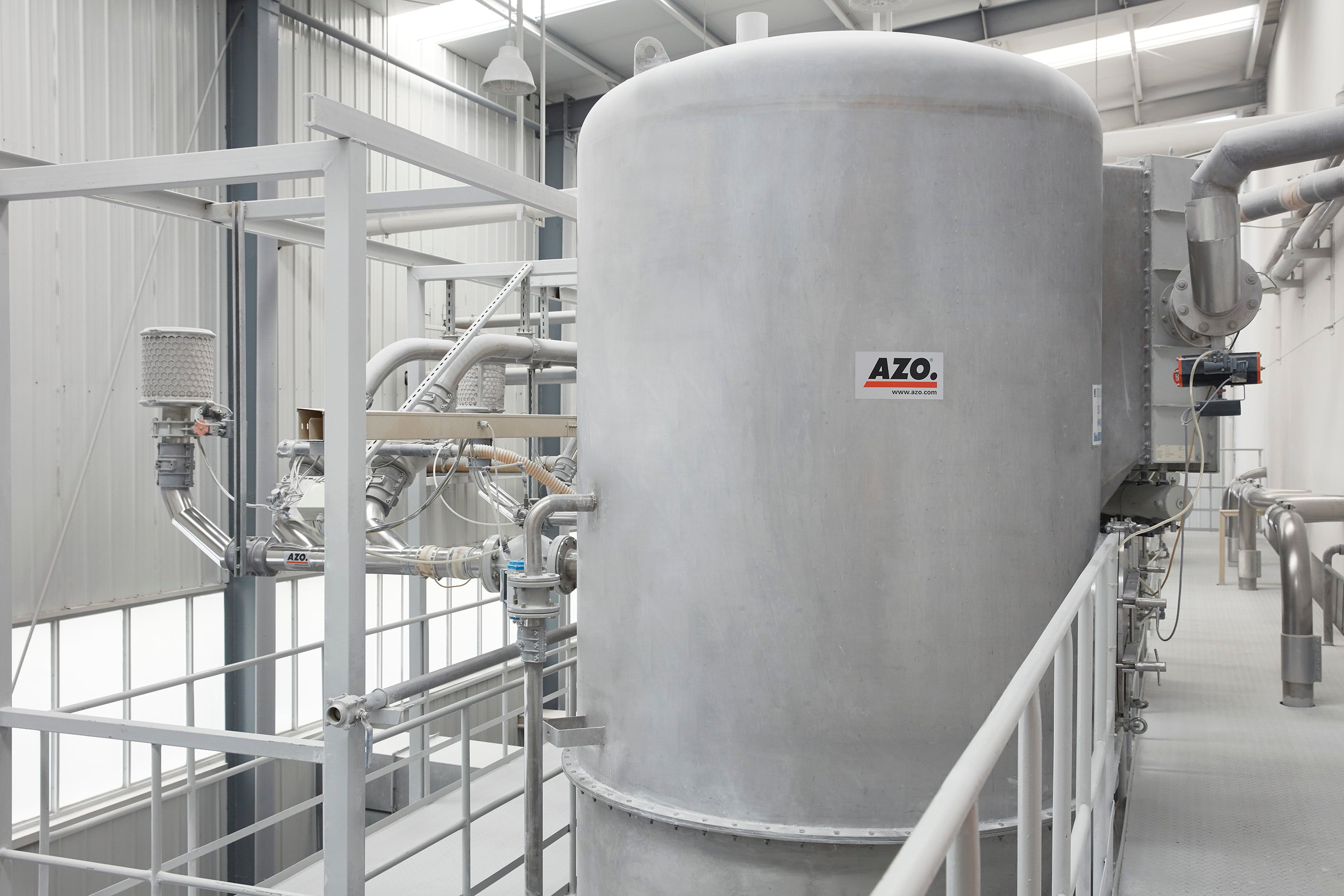
A global manufacturer of marine, protective, and decorative coatings approached AZO with a specific problem at its Lone Star State facility: titanium dioxide (TiO₂) was slowing the whole plant down.
Although this project isn’t yet live, we’re pulling back the curtain and giving you a peek into our early-stage design process. Here’s how we redesigned the ingredient handling process to meet their objectives while working with existing equipment and controls.
The Challenge
The existing bulk bag unloading operation couldn't keep up. A 2,200 lb bulk bag of TiO₂ took more than 30 minutes to unload; other fillers took about 15. At roughly twice as long for one ingredient, TiO₂ became the constraint on everything downstream.
The plant runs a single 10-hour schedule, so there's no easy fix of just adding hours. Throughput had to improve inside the shift they already run.
There was a second problem stacked on top of the first. One bulk bag unloading station fed multiple rooftop silos via a shared conveying path. Residual material stayed in the line between products and created a cross-contamination risk. In coatings, that shows up in the finished product fast. Residual white material bleeding into a following batch can shift a red coating toward pink.
The rest of the list read like a plant manager's running tab of daily headaches:
- About 1% material loss in the existing process
- Roughly $25,000 a year in maintenance
- Low-mounted valves and components that made maintenance access difficult
- A suspended bulk bag arrangement that created an operator safety concern during bag handling
All of this was happening while the facility planned to increase output. Production sits around 2.5 million gallons today, with a target near 3.6 million. That's about 44% planned growth, and powder handling couldn't be the thing holding it back.
The target for the redesign: roughly 13,500 lb/hr of conveying capacity, supporting about 60 batches during a 10-hour shift.
The AZO Solution
We designed a dedicated TiO₂ bulk bag unloading and pressure conveying system. Pulling TiO₂ off the shared path was the decision that addressed the two biggest concerns at once: throughput and cross-contamination.
A few specifics:
- A dedicated conveying line. A bulk bag unloader, rotary valve, and controlled conveying arrangement with a diverter valve routes product to the required existing silos.
- Engineering built around TiO₂, not the easy fillers. TiO₂ doesn't flow like the materials the plant already handles well. We reviewed and revised the conveying approach specifically around its flow characteristics.
- A ground-level, dust-tight connection. Moving the bulk bag connection down to ground level improved operator access and fixed the maintenance access problems around the existing low-mounted valves.
- Vent filter upgrades. We upgraded the silo vent filters to handle the increased conveying airflow while keeping an appropriate air-to-cloth ratio.
- Controls that fit what's already there. The design integrates with the plant's existing architecture. We worked with the company's controls partner rather than building an unnecessary standalone control environment.
Implementation
The work moved in stages through the first half of 2026. In February, a detailed discovery with the plant team documented the TiO₂ unloading bottleneck, existing silo arrangement, contamination concerns, maintenance issues, and future production requirements. AZO then developed and proposed the redesigned solution.
The project received a greenlight in May, and we worked with the customer to complete a detailed review of the updated design, including changes to improve TiO₂ flow reliability and the plan to integrate with the existing controls. Over the next three months, we scoped responsibilities and refined the final proposal.
As of August 2026, the final approval and commercial order is pending. Installation and commissioning haven't happened yet, so AZO field service hasn't completed startup activities. We'll update this section after that work is done. We estimate that equipment lead time will be 18-20 weeks following approval.
The Results
Installation and commissioning are still to come, but the anticipated system is designed to deliver measurable improvements:
- Increase TiO₂ conveying capability to about 13,500 lb/hr
- Cut into the 30-plus minute unloading time for a 2,200 lb TiO₂ bag, currently about twice the time of the plant's other fillers
- Support the goal of roughly 60 batches per 10-hour shift
- Help the facility grow from about 2.5 million toward 3.6 million gallons
- Reduce cross-contamination risk by eliminating the shared material path
- Address material loss
- Reduce the maintenance burden
- Improve maintenance access and operator safety
Conclusion
Six problems, one system. Throughput, product quality, cross-contamination, maintenance access, material loss, and operator safety were all intertwined, and the design had to address them all at once.
Two things made the difference. First, we built around where the plant is headed. The system is sized for the future production target of 3.6 million gallons, so powder handling won't become the bottleneck again as they grow. Second, we adapted as we learned more about how TiO₂ actually behaves, which meant revisiting the conveying methodology and flow-assurance requirements partway through.
The design also uses the plant's existing infrastructure and controls rather than replacing systems that still do the job effectively.
Transform your ingredient handling system and workplace with cost- and time-saving solutions. Contact AZO to connect with an engineer.
Related Blog Posts
Manufacturers across industries are balancing new opportunities with growing complexity as technology, market demand and evolving
Walk the batching area of a typical processing plant and you may see the same chain repeated: a silo feeding a screw conveyor, feeding a